Showing posts with label healthy eating. Show all posts

Thursday, January 23, 2014

REPOST: Here's a Healthy Food Your Kids Already Eat

Maia James of The Huffington Post writes a reminder to parents that while feeding children healthy foods may seem like a Sisyphean endeavor, it is not without its subtle victories. While children often balk at vegetables, they do take to the sweet taste and delightful flavors of their sweet and healthy counterparts: fresh fruit.

Image source: huffingtonpost.com

My mom, Suzanne, is a health coach and my go-to resource for help getting my very picky 4-year-old to eat! Recently, I was lamenting the fact that he has now decided to cut out even broccoli, which historically has been a favorite green. My mom reminded me not to forget the importance of fruit, which most kids already eat, and which also packs a great nutritional punch.

Fruits are packed with vitamins, minerals, antioxidants, enzymes and phytochemicals, all essential for optimal health. Fruit also contains water-soluble fiber, especially the inulins and saccharides, which are prebiotics (which serve as food for probiotics, the good bacteria that live in the digestive system). Johns Hopkins researcher Dr. Christiane Northrup says "Your gut is a very delicate ecosystem, with more flora (healthy bacteria) in it than all the other cells in the body put together. [The digestive tract] is your first line of defense against bugs and other organisms that can make you ill."

But What About All the Sugar in Fruit?

Many of my mom's clients worry about all the sugar in fruit. She had this take on it, which made a lot of sense to me:

The sugar from raw fruit is fuel for activity. How much fruit sugar one eats should be directly related to how active one is. Children are often very active, so it makes sense that they would be attracted to fruit. Bananas and dates have the most sugar and berries the least, so also keep that in mind when eating fruit.

Also good to remember: "The sugar in fruit has companion nutrients so a healthy person has no need to avoid sugar from raw fruit. Fruit juice, on the other hand, should be used sparingly, as it is the concentrated sugars without the fiber and other beneficial properties that slow sugar's absorption."

From now on, when Felix turns up his nose at broccoli, brussel sprouts, kale, lettuce, green beans and squash, I will hand him an apple, and feel good about all the nutrients he's getting from that.

Robert Pastore is a scientist who focuses on nutrition and biochemistry,  For more on him and his work, visit this website.

Friday, December 27, 2013

REPOST: Healthy eating: nutritious indigenous foods you may never have heard of

Unhealthy western diets should take a leaf from nutrient-rich indigenous fare, suggests Mark Tran in his article for The Guardian. Below are some of these indigenous fruits and vegetables that promote wellness.

Healthy eating in Senegal. Staff clean niebe, or cowpeas, at a factory in Dakar. | Image source: theguardian.com
The proliferation of the western diet, which is high in refined sugars, fats, processed grains and meat, has been blamed for a rise in global obesity and diet-related illnesses such as diabetes, hypertension and heart disease. As awareness of healthy eating has grown in the west, sales of once obscure grains such as quinoa (pronounced keen-wah) have skyrocketed. The ancient 'superfood' from Peru has a fluffy texture, and is lauded for its health benefits. Unusual among grains, quinoa is packed with dietary fibre, iron, magnesium and phosphorus. It is gluten-free, easy to digest and contains all nine amino acids. Amid growing concern that unhealthy eating habits are crowding out healthier traditional crops, Food Tank: The Food Thinktank has compiled a list of indigenous fruits and vegetables that should be championed.

Amaranth

Amaranth is a great source of protein, vitamins and minerals. | Image source: theguardian.com
Amaranth thrives in hot climates and is typically consumed in Togo, Liberia, Guinea, Benin, and Sierra Leone. It is an excellent source of protein, vitamins and essential minerals including calcium, iron, magnesium, potassium and zinc.

Cowpea

Cowpeas, more commonly known as black-eyed peas. | Image source: theguardian.com
This African legume is one of the continent's oldest crops. More commonly known as the black-eyed pea, it is drought resistant and hardy and thrives even in poor soil. All parts of the cowpea crop, including the leaves, are consumed as all are rich in nutrients and fibre.

Bitter melon

The bitter melon is related to the cucumber. | Image source: theguardian.com
Originally from the Indian subcontinent, this sour vegetable is popular in many Asian countries, where it is sometimes called the bitter gourd or karela. This warty-looking plant thrives in tropical regions and is believed to be the world's most bitter fruit. The bitter melon has cancer-fighting properties, research shows, and has long been used as a herbal remedy for a range of ailments including type 2 diabetes.

Pamir mulberry

Dried Pamir mulberries for sale in Khorog, Tajikistan. | Image source: theguardian.com
This fruit grows in the mountainous terrain of the Gorno-Badakhshan province of Tajikistan, which is ill-suited for the production of more common grains such as wheat and barley. The Pamir mulberry was an important food source during the second world war, and can be eaten raw, dried, whole, ground or as a jam.

Bunya nut

The bunya nut, or Araucaria bidwillii, is native to the Australian rainforest.| Image source: theguardian.com
Bunyas are a traditional food for Australian Aboriginal people, who sometimes eat them raw or roasted or bury them in mud for months to enhance their flavour. The nuts are similar to the chestnut in appearance and taste and grow on towering, but increasingly rare, pines in the region's rainforests.

Yacón

The crunch bunch – dried Yacón root slices. |  Image source: theguardian.com
Also known as the Peruvian ground apple, this root crop has been grown in the Andes for more than a millennium. The Yacón resembles a sweet potato on the outside, but its crunchy flesh looks more like an apple or pear. The tubers have a high water content and can be grated and squeezed through a cloth to yield a sweet, refreshing drink.

Guayabo

Guavas ripening on a tree. It is believed the term "guava" derives from the Arawak word guayabo, meaning "guava tree", via the Spanish guayaba. | Image source: theguardian.com
The green fruit, native to Uruguay and southern Brazil, has a sweet and sour taste. It has excellent nutritional and medicinal value because of its superior mineral and antioxidant content. In Uruguay, the guayabo is readily adapted to shallow soil and a mountainous environment, allowing it to thrive, even in the wild.

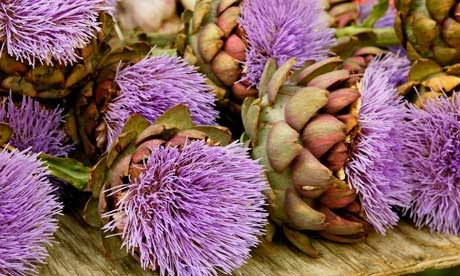
Perinaldo artichokes

Flowering Perinaldo artichokes, particularly tasty with sea food. | Image source: theguardian.com
This thistle, which has a tasty centre, is native to the Mediterranean and was cultivated in ancient Greece. Its edible flower bud is a good source of fibre, vitamin C, folic acid and minerals. This variety of artichoke is drought resistant.


Robert Pastore designs nutritional protocols for all age groups and works closely with his patients to ensure that they are properly implemented. Visit this website for more information on diet and nutrition.

Tuesday, July 30, 2013

REPOST: When healthy eating becomes unhealthy obsession

In the following Seattle Times article,  Carrie Dennett talks about orthorexia, or the unhealthy obsession with eating healthy food, and how it can lead to diets so strict that they can, ironically, deprive the orthorexic eater of essential nutrients.

Good nutrition is a cornerstone of good health, but when taken to extremes, the pursuit of a healthful diet can become unhealthy. Orthorexia is an unhealthy obsession with eating healthy food that can lead to diets so strict that they interfere with social relationships and may become dangerously low in calories and essential nutrients.

Unlike the “classic” eating disorders anorexia and bulimia, orthorexia generally doesn’t have weight loss as a goal. The focus is on the quality of food, not the quantity.

“They start with wanting to be more healthy, and then they take it to the next level,” said Dr. Neeru Bakshi, a psychiatrist at The Moore Center for Eating Disorders in Bellevue. Orthorexia isn’t an officially recognized eating disorder, but it has the potential to morph into anorexia, especially if the list of foods to avoid grows too long.

Some people are prone to adopting any socially acceptable diet that restricts certain food groups, said Raven Bonnar-Pizzorno, The Moore Center’s director of nutrition and dietary services. Vegetarian, vegan, gluten-free, raw food and paleo diets are a few.

If the diet becomes too strict, unhealthy weight loss and nutrient deficiencies can result. “Many people benefit from being reminded of how important moderation is,” she said. “It’s easy to fall prey to the ‘should monster.’ ”

Where does healthful eating end and orthorexia begin? It’s one thing to generally try to eat organic or eat whole grains instead of refined grains. It’s another to be so fixated on avoiding pesticides, GMOs or white flour that your diet becomes inflexible.

Bakshi said concerned family and friends are often the catalyst for seeking treatment. “They’ll say, ‘You won’t go out with us to restaurants, you’re not letting dad cook the food — and you’re not looking well.’ ”

Bakshi says that what orthorexia has in common with anorexia and bulimia is a sense of control and predictability — you can’t control life, but you can control your food — and that obsessing about food can be a way of avoiding negative feelings.

Wendy Spin, of Colorado, developed orthorexia nine years ago as a 21-year-old bodybuilder. “I was restricting certain foods, counting calories obsessively, making sure I got a certain amount of protein.” When she was under stress, she coped by tightening her control on food.

The downside is that when control cracks and a forbidden food is eaten, feelings of failure, guilt and self-hatred often follow. Spin tried to stop her food obsessions by trading bodybuilding for CrossFit, only to run into trouble when she entered a paleo diet challenge.

“Every time I ate something that wasn’t paleo, I would just beat myself up. I finally said, ‘I just can’t do this any more.’ ” She sought treatment two years ago. While she still struggles, she says she’s generally better today.

Orthorexics often use their diet to achieve a feeling of perfection, purity or superiority. “It’s really a judgmental kind of elitist denial you’re in,” Spin said. “You dismiss what everyone else says, thinking ‘What do they know ... look at how they eat.’ ”

Ultimately, Bonnar-Pizzorno said that people with orthorexia start to base their very identity on how they eat. “You need to not find the meaning of life through your diet,” she said.


As a registered nutritionist,Robert Pastore, PhD, addresses issues regarding eating habits. Get pointers on choosing the right nutrition plan fit for your lifestyle by subscribing to this Twitter account.