Monday, November 3, 2014

REPOST: 3 Hot Nutrition Trends: Healthy or Gimmicky?

Ancient grains, protein, and food and drinks with no artificial sweeteners or preservatives are three of today’s most popular diet trends. But are they really healthy or just hype? Nutritionist Keri Gran discusses the nutritional benefits of each food group in the article below:

Move over, quinoa. Sorghum, teff, millet and other ancient grains are making a comeback. | Image source: Usnews.com

When I attended the Academy of Nutrition and Dietetics Food and Nutrition Conference and Expo in Atlanta earlier this week, I was on a mission. Sure, I wanted to network with my friends and colleagues, eat and drink at fun restaurants, go to a karaoke bar (yes, karaoke) and hopefully learn something new at a lecture. But my real mission was to discover new products and trends that I could tell my patients about. So walking aisle after aisle – in stilettos, no less – looking at more than 350 exhibitors, these three trends are what really called out to me:

Ancient Grains
Move over, quinoa, and say hello to sorghum, teff, millet, buckwheat, chia, kamut, bulgar and amaranth. All ancient grains are making a comeback. Not familiar with them? They've been around for centuries, some dating as far back as 6,000 B.C. Most are high in fiber and may help prevent certain cancers, heart disease and high blood pressure.
It seems like a lot of the hoopla around ancient grains is because most, but not all, are gluten-free. And with gluten-free diets being so trendy at the moment, this comeback shouldn’t be surprising. Also, a lot of people do not want to consume genetically modified foods (a conversation for another time) and supposedly, these grains are true to their origin.
However, many companies are simply adding ancient grains to their existing products to jump on the bandwagon – and their products aren't necessarily healthy products. That’s why it’s important to read the entire ingredient nutrition facts label to see exactly what you’re getting.

Going Natural

Many brands I saw at the expo were proud to announce they removed everything “artificial” from their products. Specifically, they advertised no artificial sweeteners or preservatives, touting them as “all natural.” According to Pittsburgh nutritionist Heather Mangieri, a spokesperson for the Academy of Nutrition and Dietetics, “Companies are trying to reduce their ingredients based on consumer demand.” Who could argue with that?
However, the Food and Drug Administration does not define the claim “all natural.” At this point, those words might appear on a product or be part of a company’s marketing plan, but it doesn’t necessarily mean it’s good for you. For example, replacing a soda's artificial sweeteners with stevia doesn’t make it a healthy product.
But I did find many products on the expo floor that made me smile. They had minimal ingredients and were packed with nutrition – deserving of an “all-natural” claim. “Consumers want to open up their refrigerators and find foods that they grew up on,” said Joan Salge Blake, a spokesperson for the Academy of Nutrition and Dietetics and a nutrition professor at Boston University. I concur, but it depends how you look at that: Not everyone grew up with healthy foods.

Protein Power
All companies were more than eager to tell me how much protein was in their products, including cottage cheese, yogurt, cereal and crackers. “We need protein for many different reasons,” Mangieri said. “It helps to build and repair our muscles, aids in satiety and is also important in weight management.”
“It’s all about snacking, and companies are adding protein to just about everything,” Blake said. I guess there’s a reason for that. I always tell my patients if they are hungry 30 minutes after they ate a snack, chances are they didn’t have enough protein with it. But, Blake pointed out, “When companies start adding protein to water, that is just ridiculous.” Oh, yeah. Water is for hydration – leave the protein for real snack foods.

More to Come
There were also many trends that I couldn’t quite get a handle on yet. Fermentation was a hot word. As Mangieri told me, “There is a lot of talk about prebiotics and probiotics for gut health.” And phytonutrients, such as flavonols and polyphenols, were front and center in many products.
Honestly, it’s hard to keep up with all the food trends, just like it is in fashion. Some trends will look good on you, and others won’t. And if you wait long enough, an old trend just may reappear.

Dr. Robert Pastore is a member of the American College of Nutrition. Follow this Twitter account for the latest nutrition updates.

Tuesday, July 22, 2014

REPOST: 5 Reasons why you need more fat in your diet

A new study debunks the common belief that high consumption of saturated fat leads to heart disease and weight gain. According to the researchers, the real cause of health problems are lack of exercise and eating too much processed meats, carbohydrates, refined grains, and starches. FOX News has the full story below.

Image Source: foxnews.com

If you’re debating whether to add a slice of butter to your bagel this morning, go right ahead—it’s probably a better choice for your body than low-fat spreads.

The real thing you should be worried about is the bagel.

That’s the takeaway of recent research that is upending four decades of conventional wisdom on the dangers of saturated fat, which spawned a multi-billion-dollar industry in low-fat food products touted as “healthy choices.”

Confused? You’re not alone. “The first studies were indeed surprising to us,” said Dr. Ronald M. Krauss, a director at the Children’s Hospital Oakland Research Institute.

His groundbreaking research found patients with low-fat, high-carbohydrate diets didn’t experience a reduction in heart disease. But patients eating higher levels of saturated fat, found in dairy and unprocessed meat, and lower levels of carbohydrates, such as potato chips, refined sugar and pizza, were less likely to suffer heart attacks.

“What many people, including myself, thought was accepted wasn’t holding up to more rigorous research,” Dr. Krauss says. “We decided the long-accepted relationship between heart disease and saturated fat needed to be looked at.”

Is this just another health finding that will be upended years later? “There’s been this ricocheting back and forth between extremes,” Dr. Krauss acknowledges. “It’s sort of like this binary thing: If something is true, then something else is false. Unfortunately, the picture with food is more complicated and nuanced than that.”

This doesn’t mean we should be starting our day with two scoops of lard with a side of bacon—moderation still matters. Nor does it give permission to people with health risks like high cholesterol to start piling on the red meat, Dr. Krauss adds.

Instead, the research suggests the vilification of saturated fat has been a dangerous distraction from the real foes in the battle for our waistlines and hearts: processed meats and carbohydrates, refined grains and starches, and lack of exercise.

Image Source: sodahead.com

Here are some surprising facts on saturated fat:

Dietary fat doesn’t make people ‘fat’

Fat doesn’t make us fat—sugar does. Saturated fat adds to our caloric intake, but ultimately, our digestion breaks down food into the simple sugar glucose, which provides energy to our body tissue. This sugar triggers the release of insulin, a hormone that cries “Dinnertime!” to a body’s cells and turns unused energy into fat.

“It makes sense that we would think fat would make us fat,” says Sally Kuzemchak, a dietitian who writes the Real Mom Nutrition blog. “And it has more calories—9 per gram—than carbs or sugars. But during the fat-free craze we just replaced [saturated fat] with too many starchy carbohydrates,” like that bagel you’re tucking into or other foods high in refined white flour or sugar.

Saturated fat helps make you feel full

You can’t walk down a grocery aisle without seeing packaged foods trumpeting the “low-fat,” “nonfat,” “fat-free” or “reduced fat” treats inside. The great irony is that the proliferation of low-fat food has helped American waistlines expand, researchers say. Why? If you take foods with saturated fat out of the diet, your body will hunger for a replacement—and often find it in starchy, processed carbohydrates.

“The important issue is that when reducing saturated fat, there’s an increase in intake of carbohydrates; when you make a change in one, you automatically make a change in the other,” Dr. Krauss says. “There are actually adverse results in substituting carbohydrates for fat.”

Protein-rich foods like red meat and nuts, which also contain saturated fats, are best at making the stomach feel full; snack foods rich in carbohydrates and salt often leave us wanting more. “That’s why you can eat a bag of pretzels and not feel full, even though you’ve consumed hundreds of calories,” adds Kuzemchak, author of the recent “Cooking Light Dinnertime Survival Guide.”

Not all fats are created equal

Different types of fat produce different types of cholesterol, with both good and ill effects. The ratio of “good” cholesterol (high-density lipoproteins, or HDL) to “bad” cholesterol (low-density lipoproteins, or LDL) in the bloodstream has a knock-on effect for cardiovascular health risks.

Manmade trans fats found in partially hydrogenated oils like shortening are definitely bad for the body. Fats found in olive oil and fish are rich in “good” cholesterol. The recent research moves saturated fat from the “bad” to the “neutral” column, as it contains both good and bad elements that appear to cancel one another out, Dr. Krauss says.

Steak is better for you than low-fat hot dogs

Processed meats like bologna and bacon are worse for the body than a steak. Research shows that low-fat hot dogs and processed deli meat may have less saturated fat than a steak, but as much as four times more sodium—which increases the risks of heart disease and diabetes.

Whole foods, be they beef, grains or vegetables, are always a better option than packaged foods. “Try to minimize intake of processed foods, especially processed carbohydrates,” Dr. Krauss says.

While steak may be healthier than you realized, a diet heavy on vegetables is always best, he adds. And carbohydrates such as bread or rice made from whole grains rather than refined white flour like white bread and bagels are much better for you, experts say.


Image Source: criticalbench.com

Beef isn’t bad, but nuts are better

Want to know the easiest, most cost-effective way to improve your eating habits? Add two servings of nuts to your weekly diet, and you’ll cut your risk of death due to heart disease by 11 percent.

That was the conclusion of research by Dariush Mozaffarian, formerly a leading Harvard researcher and now dean of the nutrition school at Tufts University, and Simon Capewell of the University of Liverpool. The next best option, according to their research: replacing refined grains and starches with a serving of whole grains every day to reduce risk of heart-related illness by 10 percent.

“Limiting saturated fat doesn’t make the cut, because we don’t think that on its own it offers much benefit,” Mozaffarian said in a 2012 interview explaining the findings.

So put down that bagel, and pick up a handful of nuts. And feel free to butter that whole-wheat bread.


Dr. Robert Pastore is a biochemist who designs nutritional plans based on the unique needs of his patients. For more discussions on nutrition and healthy eating, follow this Twitter account.

Thursday, January 23, 2014

REPOST: Here's a Healthy Food Your Kids Already Eat

Maia James of The Huffington Post writes a reminder to parents that while feeding children healthy foods may seem like a Sisyphean endeavor, it is not without its subtle victories. While children often balk at vegetables, they do take to the sweet taste and delightful flavors of their sweet and healthy counterparts: fresh fruit.

Image source: huffingtonpost.com

My mom, Suzanne, is a health coach and my go-to resource for help getting my very picky 4-year-old to eat! Recently, I was lamenting the fact that he has now decided to cut out even broccoli, which historically has been a favorite green. My mom reminded me not to forget the importance of fruit, which most kids already eat, and which also packs a great nutritional punch.

Fruits are packed with vitamins, minerals, antioxidants, enzymes and phytochemicals, all essential for optimal health. Fruit also contains water-soluble fiber, especially the inulins and saccharides, which are prebiotics (which serve as food for probiotics, the good bacteria that live in the digestive system). Johns Hopkins researcher Dr. Christiane Northrup says "Your gut is a very delicate ecosystem, with more flora (healthy bacteria) in it than all the other cells in the body put together. [The digestive tract] is your first line of defense against bugs and other organisms that can make you ill."

But What About All the Sugar in Fruit?

Many of my mom's clients worry about all the sugar in fruit. She had this take on it, which made a lot of sense to me:

The sugar from raw fruit is fuel for activity. How much fruit sugar one eats should be directly related to how active one is. Children are often very active, so it makes sense that they would be attracted to fruit. Bananas and dates have the most sugar and berries the least, so also keep that in mind when eating fruit.

Also good to remember: "The sugar in fruit has companion nutrients so a healthy person has no need to avoid sugar from raw fruit. Fruit juice, on the other hand, should be used sparingly, as it is the concentrated sugars without the fiber and other beneficial properties that slow sugar's absorption."

From now on, when Felix turns up his nose at broccoli, brussel sprouts, kale, lettuce, green beans and squash, I will hand him an apple, and feel good about all the nutrients he's getting from that.

Robert Pastore is a scientist who focuses on nutrition and biochemistry,  For more on him and his work, visit this website.

Friday, December 27, 2013

REPOST: Healthy eating: nutritious indigenous foods you may never have heard of

Unhealthy western diets should take a leaf from nutrient-rich indigenous fare, suggests Mark Tran in his article for The Guardian. Below are some of these indigenous fruits and vegetables that promote wellness.

Healthy eating in Senegal. Staff clean niebe, or cowpeas, at a factory in Dakar. | Image source: theguardian.com
The proliferation of the western diet, which is high in refined sugars, fats, processed grains and meat, has been blamed for a rise in global obesity and diet-related illnesses such as diabetes, hypertension and heart disease. As awareness of healthy eating has grown in the west, sales of once obscure grains such as quinoa (pronounced keen-wah) have skyrocketed. The ancient 'superfood' from Peru has a fluffy texture, and is lauded for its health benefits. Unusual among grains, quinoa is packed with dietary fibre, iron, magnesium and phosphorus. It is gluten-free, easy to digest and contains all nine amino acids. Amid growing concern that unhealthy eating habits are crowding out healthier traditional crops, Food Tank: The Food Thinktank has compiled a list of indigenous fruits and vegetables that should be championed.

Amaranth

Amaranth is a great source of protein, vitamins and minerals. | Image source: theguardian.com
Amaranth thrives in hot climates and is typically consumed in Togo, Liberia, Guinea, Benin, and Sierra Leone. It is an excellent source of protein, vitamins and essential minerals including calcium, iron, magnesium, potassium and zinc.

Cowpea

Cowpeas, more commonly known as black-eyed peas. | Image source: theguardian.com
This African legume is one of the continent's oldest crops. More commonly known as the black-eyed pea, it is drought resistant and hardy and thrives even in poor soil. All parts of the cowpea crop, including the leaves, are consumed as all are rich in nutrients and fibre.

Bitter melon

The bitter melon is related to the cucumber. | Image source: theguardian.com
Originally from the Indian subcontinent, this sour vegetable is popular in many Asian countries, where it is sometimes called the bitter gourd or karela. This warty-looking plant thrives in tropical regions and is believed to be the world's most bitter fruit. The bitter melon has cancer-fighting properties, research shows, and has long been used as a herbal remedy for a range of ailments including type 2 diabetes.

Pamir mulberry

Dried Pamir mulberries for sale in Khorog, Tajikistan. | Image source: theguardian.com
This fruit grows in the mountainous terrain of the Gorno-Badakhshan province of Tajikistan, which is ill-suited for the production of more common grains such as wheat and barley. The Pamir mulberry was an important food source during the second world war, and can be eaten raw, dried, whole, ground or as a jam.

Bunya nut

The bunya nut, or Araucaria bidwillii, is native to the Australian rainforest.| Image source: theguardian.com
Bunyas are a traditional food for Australian Aboriginal people, who sometimes eat them raw or roasted or bury them in mud for months to enhance their flavour. The nuts are similar to the chestnut in appearance and taste and grow on towering, but increasingly rare, pines in the region's rainforests.

Yacón

The crunch bunch – dried Yacón root slices. |  Image source: theguardian.com
Also known as the Peruvian ground apple, this root crop has been grown in the Andes for more than a millennium. The Yacón resembles a sweet potato on the outside, but its crunchy flesh looks more like an apple or pear. The tubers have a high water content and can be grated and squeezed through a cloth to yield a sweet, refreshing drink.

Guayabo

Guavas ripening on a tree. It is believed the term "guava" derives from the Arawak word guayabo, meaning "guava tree", via the Spanish guayaba. | Image source: theguardian.com
The green fruit, native to Uruguay and southern Brazil, has a sweet and sour taste. It has excellent nutritional and medicinal value because of its superior mineral and antioxidant content. In Uruguay, the guayabo is readily adapted to shallow soil and a mountainous environment, allowing it to thrive, even in the wild.

Perinaldo artichokes

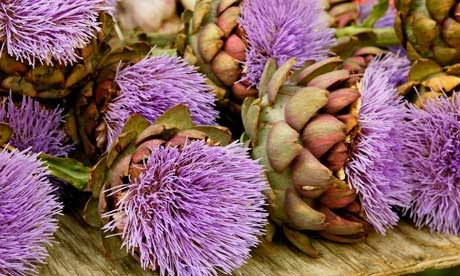
Flowering Perinaldo artichokes, particularly tasty with sea food. | Image source: theguardian.com
This thistle, which has a tasty centre, is native to the Mediterranean and was cultivated in ancient Greece. Its edible flower bud is a good source of fibre, vitamin C, folic acid and minerals. This variety of artichoke is drought resistant.


Robert Pastore designs nutritional protocols for all age groups and works closely with his patients to ensure that they are properly implemented. Visit this website for more information on diet and nutrition.

Friday, November 15, 2013

REPOST: You Can Help Cut Acrylamide in Your Diet

Acrylamide is a chemical that can form in some food during high-temperature cooking processes. Scientists believe that it can cause cancer in humans at high doses. The U.S. Food and Drug Administration provides the following tips on reducing acrylamide consumption. 


Image Source: fda.gov

If you're trying to lose weight, you may already be telling your waiter to hold the fries. Now there's another health benefit you can reap: Cutting down on certain fried foods can also help you cut down on the amount of acrylamide you eat. That's a good thing because high levels of acrylamide have been found to cause cancer in animals, and on that basis scientists believe it is likely to cause cancer in humans as well.

FDA chemist Lauren Robin explains that acrylamide is a chemical that can form in some foods—mainly plant-based foods—during high-temperature cooking processes like frying and baking. These include potatoes, cereals, coffee, crackers or breads, dried fruits and many other foods. According to the Grocery Manufacturers Association, acrylamide is found in 40 percent of the calories consumed in the average American diet.

While acrylamide has probably been around as long as people have been baking, roasting, toasting or frying foods, it was only in 2002 that scientists first discovered the chemical in food. Since then, the FDA has been actively investigating the effects of acrylamide as well as potential measures to reduce it. Today, the FDA posts a draft document with practical strategies to help growers, manufacturers and food service operators lower the amount of acrylamide in foods associated with higher levels of the chemical.

In addition, there are a number of steps you and your family can take to cut down on the amount of acrylamide in the foods you eat.

Acrylamide forms from sugars and an amino acid that are naturally present in food. It does not form, or forms at lower levels, in dairy, meat and fish products. The formation occurs when foods are cooked at home and in restaurants as well as when they are made commercially.

"Generally speaking, acrylamide is more likely to accumulate when cooking is done for longer periods or at higher temperatures," Robin says. Boiling and steaming foods do not typically form acrylamide.

Tips for Cutting Down on Acrylamide

Given the widespread presence of acrylamide in foods, it isn't feasible to completely eliminate acrylamide from one's diet, Robin says. Nor is it necessary. Removing any one or two foods from your diet would not have a significant effect on overall exposure to acrylamide.

However, here are some steps you can take to help decrease the amount of acrylamide that you and your family consume:

Frying causes acrylamide formation. If frying frozen fries, follow manufacturers' recommendations on time and temperature and avoid overcooking, heavy crisping or burning. Toast bread to a light brown color rather than a dark brown color. Avoid very brown areas. Cook cut potato products such as frozen french fries to a golden yellow color rather than a brown color. Brown areas tend to contain more acrylamide.

Do not store potatoes in the refrigerator, which can increase acrylamide during cooking. Keep potatoes outside the refrigerator in a dark, cool place, such as a closet or a pantry.

FDA also recommends that you adopt a healthy eating plan, consistent with the Dietary Guidelines for Americans, including:

Eat plenty of fruits, vegetables, whole grains, and fat-free or low-fat milk products.

Include lean meats, poultry, fish, beans, eggs and nuts.

Choose foods low in saturated fats, trans fat (which both raises your bad LDL cholesterol and lowers your good HDL cholesterol and is linked to heart attacks), cholesterol, salt and added sugars.

This article appears on FDA's Consumer Updates page, which features the latest on all FDA-regulated products.


Robert Pastore, PhD, is a nutrition expert who designs comprehensive diet plans that are specific to the needs of his patients. Know the right nutritional protocol for you on this website.

Tuesday, September 17, 2013

REPOST: Research confirms Mediterranean diet is good for the mind

A Mediterranean diet is normally composed of sizable servings of olive oil, vegetables, fruits, and fish. According to a systematic review, a high adherence to this type of diet lowers one’s risk of developing dementia at an old age.

The first systematic review of related research confirms a positive impact on cognitive function, but an inconsistent effect on mild cognitive impairment.

Over recent years many pieces of research have identified a link between adherence to a Mediterranean diet and a lower risk of age-related disease such as dementia.

Until now there has been no systematic review of such research, where a number of studies regarding a Mediterranean diet and cognitive function are reviewed for consistencies, common trends and inconsistencies.


Image source: exeter.ac.uk

A team of researchers from the University of Exeter Medical School, supported by the National Institute for Health Research Collaboration for Leadership in Applied Health Research and Care in the South West Peninsula (NIHR PenCLAHRC), has carried out the first such systematic review and their findings are published in Epidemiology.

The team analysed 12 eligible pieces of research, 11 observational studies and one randomised control trial. In nine out of the 12 studies, a higher adherence to a Mediterranean diet was associated with better cognitive function, lower rates of cognitive decline and a reduced risk of Alzheimer’s disease.

However, results for mild cognitive impairment were inconsistent.

A Mediterranean diet typically consists of higher levels of olive oil, vegetables, fruit and fish. A higher adherence to the diet means higher daily intakes of fruit and vegetables and fish, and reduced intakes of meat and dairy products.

The study was led by researcher Iliana Lourida. She said: "Mediterranean food is both delicious and nutritious, and our systematic review shows it may help to protect the ageing brain by reducing the risk of dementia. While the link between adherence to a Mediterranean diet and dementia risk is not new, ours is the first study to systematically analyse all existing evidence."

She added: "Our review also highlights inconsistencies in the literature and the need for further research. In particular research is needed to clarify the association with mild cognitive impairment and vascular dementia. It is also important to note that while observational studies provide suggestive evidence we now need randomized controlled trials to confirm whether or not adherence to a Mediterranean diet protects against dementia."


Dr. Robert Pastore is a nutrition expert known for his broad knowledge in drug interactions, pharmacokinetics, and nutritional protocols. More about his specialization can be read here.

Friday, August 16, 2013

Why starvation is the worst way to lose weight

Image Source: examiner.com

It is not uncommon for people to starve themselves when they want to lose the unwanted pounds. It does sound logical after all. You gain weight from eating too much; eating less should do the opposite. So how come it doesn’t work?

First of all, you must understand how food affects the body. For one, it sates hunger. More importantly, it provides nutrition and energy to the body, allowing you to function properly during the day.

Image Source: tescohealthandwellbeing.com

Carbohydrates are the body’s main source of energy and are used up every time you perform physical activities. Meanwhile, fat is the body’s secondary source of energy. It is what your body uses once your store of carbohydrates is drained. When you take in too much carbohydrates, your body fails to use the excess and stores it as fat, leading to extra weight. When you eat less, your body has no choice but to use your extra fat reserves to function, leading to weight loss.

This, however, is not the case with starvation. When you do not eat or you take meals at irregular intervals, your body enters a so-called “starvation mode,” where your body ensures your survival by storing whatever source of energy you can use in the form of fat even if you don’t really need it.


Image Source: seniorsworldchronicle.com

Additionally, starvation weakens your metabolism, impairing your capacity to process food. This means that your body burns less fat and carbohydrates. It also weakens your muscles, decreasing your capacity to exercise. When combined, these factors easily lead to weight gain.

Therefore, the best way to lose weight is by eating a balanced and well-designed diet at regular intervals and combining this with exercise. For a comprehensive weight loss strategy, you can also visit a nutritionist or dietician.


Robert Pastore, PhD, specializes in the creation of diet plans for specific purposes. Visit this website for more information about his approach.

Thursday, August 1, 2013

Retaining energy: It all boils down to chewing


Image source: naturalwellnessgirl.com

The human body stockpiles energy by consuming, digesting, and absorbing foods rich in carbohydrates and protein. In a recent panel discussion at the 2013 Institute of Food Technologists (IFT) Annual Meeting & Food Expo® , however, it was pointed out that more than consumption, chewing behaviors determine the level of energy the body retains.

“Particle size has bio-accessibility of the energy of the food that is being consumed,” explained Dr. Richard Mattes, professor of foods and nutrition at Purdue University, West Lafayette, Ind. “The more you chew, the less is lost and more is retained in the body.”

Chewing habits differ from one person to another. Modifying them could be challenging. But if nutrition is taken into consideration, people might as well follow eating behaviors prescribed by science as optimal ways to tease out nutrients from food.


Image source: socialmediaclub.org

During the conference, Mattes shared a study of almonds chewed with different frequencies: 10 times, 25 times, and 40 times. The chewers’ fecal fat and the energy loss equivalent to the number of chews were then measured. The findings suggest that with fewer chews, the larger particles are eliminated by the body. With more chews, the smaller particles are absorbed into the system.

“If the goal is to include food that is enjoyable and contribute protein, a whole almond is probably the way you want to go,” said Mattes. “If you’re interested in maximizing Vitamin E intake, chopped almonds, almond butter, or almond oil may be a better choice.”

In addition to almonds, mixed fibers from fruits, vegetables, and whole grains were recommended by the panel as excellent high-energy sources.


Image source: sheknows.com

Dr. Robert Pastore studies biochemistry, nutrigenomics, and all aspects of human nutrition. Visit this website for more information on his specializations.

Tuesday, July 30, 2013

REPOST: When healthy eating becomes unhealthy obsession

In the following Seattle Times article,  Carrie Dennett talks about orthorexia, or the unhealthy obsession with eating healthy food, and how it can lead to diets so strict that they can, ironically, deprive the orthorexic eater of essential nutrients.

Good nutrition is a cornerstone of good health, but when taken to extremes, the pursuit of a healthful diet can become unhealthy. Orthorexia is an unhealthy obsession with eating healthy food that can lead to diets so strict that they interfere with social relationships and may become dangerously low in calories and essential nutrients.

Unlike the “classic” eating disorders anorexia and bulimia, orthorexia generally doesn’t have weight loss as a goal. The focus is on the quality of food, not the quantity.

“They start with wanting to be more healthy, and then they take it to the next level,” said Dr. Neeru Bakshi, a psychiatrist at The Moore Center for Eating Disorders in Bellevue. Orthorexia isn’t an officially recognized eating disorder, but it has the potential to morph into anorexia, especially if the list of foods to avoid grows too long.

Some people are prone to adopting any socially acceptable diet that restricts certain food groups, said Raven Bonnar-Pizzorno, The Moore Center’s director of nutrition and dietary services. Vegetarian, vegan, gluten-free, raw food and paleo diets are a few.

If the diet becomes too strict, unhealthy weight loss and nutrient deficiencies can result. “Many people benefit from being reminded of how important moderation is,” she said. “It’s easy to fall prey to the ‘should monster.’ ”

Where does healthful eating end and orthorexia begin? It’s one thing to generally try to eat organic or eat whole grains instead of refined grains. It’s another to be so fixated on avoiding pesticides, GMOs or white flour that your diet becomes inflexible.

Bakshi said concerned family and friends are often the catalyst for seeking treatment. “They’ll say, ‘You won’t go out with us to restaurants, you’re not letting dad cook the food — and you’re not looking well.’ ”

Bakshi says that what orthorexia has in common with anorexia and bulimia is a sense of control and predictability — you can’t control life, but you can control your food — and that obsessing about food can be a way of avoiding negative feelings.

Wendy Spin, of Colorado, developed orthorexia nine years ago as a 21-year-old bodybuilder. “I was restricting certain foods, counting calories obsessively, making sure I got a certain amount of protein.” When she was under stress, she coped by tightening her control on food.

The downside is that when control cracks and a forbidden food is eaten, feelings of failure, guilt and self-hatred often follow. Spin tried to stop her food obsessions by trading bodybuilding for CrossFit, only to run into trouble when she entered a paleo diet challenge.

“Every time I ate something that wasn’t paleo, I would just beat myself up. I finally said, ‘I just can’t do this any more.’ ” She sought treatment two years ago. While she still struggles, she says she’s generally better today.

Orthorexics often use their diet to achieve a feeling of perfection, purity or superiority. “It’s really a judgmental kind of elitist denial you’re in,” Spin said. “You dismiss what everyone else says, thinking ‘What do they know ... look at how they eat.’ ”

Ultimately, Bonnar-Pizzorno said that people with orthorexia start to base their very identity on how they eat. “You need to not find the meaning of life through your diet,” she said.


As a registered nutritionist,Robert Pastore, PhD, addresses issues regarding eating habits. Get pointers on choosing the right nutrition plan fit for your lifestyle by subscribing to this Twitter account.

Friday, June 28, 2013

REPOST: Eat This Now: Seaweed

Many types of food have long been known to be beneficial for specific reasons.  Lean meat is good for the heart and carrots are good for eyes.  TIME publishes a weekly feature on lesser-known food with surprisingly numerous benefits.  This article talks about the vitamins found in seaweed.

In the last few years, seaweed has evolved from sushi-roll staple to everyday snack, thanks to the growing popularity of brands like SeaSnax. But is it actually good—and good for you? In our second installment of “Eat This Now,” we break it all down.
Image source: TIME
The food: Nori, which is a red seaweed that turns black and green when dried, is one of the most prevalent types for snacks and an easy first dip into seaweed, although there are many types of seaweed, like kelp, that are also widely consumed. As with other “superfoods,” it’s hard to know how much of the hype is a marketing push versus legitimate health claims, but even dried nori has a wealth of nutrients.
The hype: “In Korean culture, seaweed is like bread,” says Jin Jun, the founder of SeaSnax. “It’s a very sacred part of our culture. It is served to us in soup on our birthday and given to women for three weeks after childbirth. In ancient Korean folklore, the tradition came about by watching whales eat seaweed after giving birth. According to our elders, it is supposed to replenish and rejuvinate the body.”
Other seaweed snack brands, like Annie Chun’s, Sea’s Gift and Trader Joe’s, also tout a variety of health perks, including low fat and calorie counts, and richness in minerals. especially the low calorie count. And, per Sea Gift’s website, “seaweeds offer a tremendous range of therapeutic possibilities.”
Image source: TIME
The truth: Although much of the rejuvenating claims come from Korean and Japanese traditions—not scientific evidence—other research is starting to confirm that seaweed does indeed contain a wide variety of vitamins and nutrients that could prevent disease. A 2011 study published in the American Chemical Society’s Journal of Agricultural and Food Chemistry reviewed 100 studies on the health benefits of seaweed and reported that some of the proteins in seaweed could serve as better sources of bioactive peptides than those in milk products. These reduce blood pressure, and boost heart health.
Seaweed also has an impressive amount of nutrients like vitamins A, B-6 and C as well as iodine and fiber. And that low calorie count is definitely legitimate: ten sheets of Nori have just 22 calories.
The preparation: Seaweed can be cooked raw, with a little olive oil, salt and pepper, but snack brands have pushed out some interesting takes on dried nori stacks, like wasabi flavored strips or toasty coconut flavored “sprinkles” to top ice cream or popcorn. It’s difficult to find raw seaweed in the local grocery store, but dried products are making their way from health stores into general supermarkets. “I’ve been seeing seaweed more in more in snacks and even used as noodles,” says Theresa Albert, a nutritionist and diet consultant based in Toronto. “The snacks are actually very lightly processed, with a little seasoning added. I recommend it for my traveling clients because it is a nutrient dense food that you can count on.”
To find raw seaweed to cook up in your own kitchen, Albert recommends visiting Asian markets if one is available. Unfortunately, my own venture into New York City’s Chinatown proved unsuccessful, and I could only purchase dried seaweed—but a lot of it.
Image source: TIME
The taste: Not great. As much as I wanted to like the seaweed snacks (and I tried several types), I wasn’t a big fan. To me, it was akin to taking a bite of fish food. Or what I imagine that experience would taste like. I’m a seaweed salad and sushi enthusiast, but chipotle-flavored nori strips just didn’t do it for me. Still, there’s no denying the snacks are growing in variety and popularity—and several of my co-workers really enjoyed them. “We sell to a lot of moms, yogis and coaches,” says Jun.
The takeaway: Try it. Perhaps it’s a trend I’ll personally pass on, but given its impressive nutritional profile, it’s worth a go for more adventures snackers.

Robert Pastore, PhD customizes diet plans for people with a wide range of diseases and conditions, including heart disease.  Follow this Twitter page for more insights on balanced diets for people with special needs.

Tuesday, May 28, 2013

REPOST: Dining out with food allergies

For individuals who enjoy eating out, having food allergies can be much more than just an annoyance--it can be dangerous.  This CNN article delivers tips on how one can go out and enjoy all that the dining scene has to offer despite the allergies.


(CNN) -- Whether it's a special occasion or a Saturday night, for many Americans, dining out is one of life's great pleasures.

However, for the millions of Americans with severe life-threatening food allergies, dining out can feel like a minefield. According to the U.S. Food and Drug Administration, the top eight foods that cause 90% of food allergic reactions are: dairy, eggs, wheat, soy, fish, shellfish, peanuts and tree nuts. However, anyone can be allergic to anything at any time.

So how do you avoid your allergens without avoiding your life? Here are my top strategies for dining out with a severe, life-threatening food allergy -- keeping in mind that if at any point you don't feel heard, understood or safe, don't eat; never risk it.

Before you go

Understand your medical diagnosis and be prepared for allergic reactions. Fill out an anaphylaxis action plan with your medical provider and carry the plan and your emergency medication, such as an epinephrine auto-injector, with you at all times.

Be able to communicate your food allergy needs clearly, firmly and factually to people around you (friends, family, loved ones and restaurant staff). When speaking with others about your medical needs, be assertive, never aggressive, and remember that honey always works better than vinegar. I counsel my clients to have three sentences ready to communicate to anyone who needs to know.

Be choosy about the restaurant. Look for a restaurant whose core mission involves hospitality and catering to all its guests. Many restaurants now have special menus or a notation on the menu that they understand food allergy requests. That's also a great place to start. Pick out one dish from the menu that looks like it might be suitable for your needs.

Call ahead and speak to the highest person in charge who's available, the manager or chef. You're looking for a knowledgeable representative of the restaurant. Ask about the dish that you chose: would it be suitable for your needs; what about preparation, ingredients, cross contact with your allergens?

Make a reservation on the early side on a less busy night. For example, 6 p.m. Tuesday versus 8:30 p.m. Saturday will give the restaurant the best chance of being able to accommodate your needs.

When you get there

Speak to whomever you spoke to on the phone and reiterate your needs. You can also use a chef card -- a business-sized card with explanations in pictures and words of your allergens and where they hide. Chefs that I've spoken to love them as they eliminate the game of "telephone" that can happen between the patrons and the kitchen.

When you're seated, relay your needs again. Go over your dish, ingredients, preparation and issues of cross contact. If the restaurant staff communicates that they feel confident about serving you, then place your order.

When your order arrives, confirm that it is your "special" dish. Look at the dish before you dine. If it doesn't look like what you ordered, don't eat it and speak with management immediately.

If all goes well, let the staff know that they've done a great job. An e-mail "thank you" the next day is always appreciated, or a review on online restaurant listings is nice, too.

If after any of these steps you still feel unsafe, don't eat. If you have an allergic reaction, use your emergency medication immediately and call 911.

Food allergies are real and serious. By understanding your food allergy diagnosis, having your emergency medications on your person at all times, knowing how and when to use your medication and communicating your needs clearly to those around you including restaurant staff, you can have enjoyable dining out experiences. Remember my motto: "Just because you have a restricted diet doesn't mean you have a restricted life."


Extra tips

-- Don't forget to let the bartender know your food allergy needs as tree nuts, peanuts, dairy and eggs are used often in drinks.

-- Desserts, even when made in-house, are usually allergen-filled with wheat, eggs, dairy, tree nuts or peanuts. It's best to skip them.

-- Dim lighting may be romantic, but never eat what you can't see.

-- If you're at a family event or a work dinner and these steps are out of your control, don't miss out. Eat beforehand or bring a snack with you, have a safe-for-you drink and join in!


As a recognized nutritionist, part of the issues addressed by Robert Pastore, PhD,are food allergies.  Read more stories about diets and how they can help you avoid the complications caused by allergies by following this Twitter page.

Wednesday, May 8, 2013

Fetal programming: Mothers’ nutrition as key to babies’ future health

“Mothers know best,” so goes the cliché. When it comes to health, this saying also holds truth. In fact, mothers can influence the health of their babies even during pregnancy.
Image source: avenueclinic.co.uk

The theory of fetal programming or prenatal programming claims that during fetal development, the mothers’ nutrition intake influences the growth of their babies’ organs. The conditions of these organs, in turn, affect the babies’ health for the rest of their lives.

Image source: Carrot Parrot

Elizabeth Somer, a registered dietitian and author of the book Nutrition for a Healthy Pregnancy, says that many pregnant women are not getting the essential vitamins and nutrients that their babies need. To supplement this inadequacy, the dietitian recommends the following diet guidelines:
  1. Consumption of vitamin B12-rich products. Vitamin B12 is essential for the formation of blood cells and various proteins. It also lowers the risk for insulin resistance.
  2. Munching of fruits that are good sources of vitamin C, which lowers oxidative damage to fetal tissues and risk for heart diseases.
  3. Intake of vitamin D, which prevents the risk of chronic diseases, like multiple sclerosis and cancer.
  4. Eating of fatty fish and algae containing DHA omega-3, an important building block of the babies’ brain.
  5. Ingestion of folate-rich green vegetables or 600 to 800 micrograms of folic acid daily. Children born to mothers with high folate are less likely to suffer from emotional problems later in life, says a published study on The American Journal of Clinical Nutrition.

Image source: US College Search

While fetal programming remains an area of research that has to be furthered explored, it is a known fact that mothers who care for their unborn babies are more likely to be health-conscious during pregnancy. Pregnant women, however, should consult with their doctors or nutritionists before starting any diet program.


Robert Pastore is a nutrition expert who provides nutritional plans based on the unique biochemical makeup of every individual. Visit this blog to learn more about nutrition.

Monday, April 15, 2013

Allergies under control: Learning from Raul Ibañez’s game plan

Image Source: usatoday.com
A few years back, Seattle Mariners left fielder Raul Ibañez had episodes of severe breathing difficulty. A short strenuous session in the weight room or even just a 30-minute jog was enough to drain him. With a career spanning two decades, Ibañez never had a sore as exhausting as this.

The baseball star’s lung tests indicated no aberrations; an echocardiogram and EKG also did not show any heart problems. Yet, his dilemma continued to plague his game routine. After further medical exams, Ibanez’s condition was finally correctly diagnosed. Clinical nutritionist Robert Pastore, PhD, worked closely with him and concluded that he had delayed allergies to gluten and a type of dairy protein called casein. Dr. Pastore provided Ibanez with an individual nutrition plan, which allowed him to manage his diet and respond to treatments effectively.

Image Source: articles.philly.com
While his nutritional restrictions left him uncomfortable in the weeks following his diagnosis, Ibañez found his changed eating habits an effective means to maintain good health. Bread, pasta, milk, and even pizza were off-limits on his menu, but meals served with bison, grilled chicken, eggs, sweet potatoes, and vegetables made his diet very nutritious. He also started eating organics and those that contain rich amounts of healthy fat, such as nuts and avocado.

Image Source: glutenfreeoatmeal.com
It might take an allergy to change one’s lifestyle, but while physical conditions are still at their best, it is best to course through healthy regimens early.


More on biochemistry, nutrigenomics, and human nutrition can be read here.

Tuesday, March 12, 2013

Detoxification: The art of body cleansing


Image Source: eatontherun.net


When people have high levels of toxins in the body, they can get easily tired and are prone to acne breakouts and blemished skin. They are also prone to headaches, digestive problems, and hunger pangs. At worst, they can develop depression and weight gain. To get rid of toxins, detoxification is needed. It refers to the process of cleansing the body from the inside out to get rid of disease-causing impurities. While the human body detoxifies naturally (through breathing, sweating, digestion, and urinating), some people undergo detoxification programs to hasten the process of toxic elimination.


Image Source: ehow.com


Fasting is the basic form of detoxification. Though it was initially performed by various religions in the belief that abstinence from food will purify the soul, fasting is currently more associated to body cleansing and fat shedding. Today, fasting takes various forms as detox diets. Here are some of them:

• The Master Cleanse. Also known as the maple syrup diet or lemonade diet, it was developed by Stanley Burroughs. It involves drinking 6 to 12 glasses of a special liquid mixture of water, lemon juice, maple syrup, and cayenne pepper each day for 10 to 45 days. Beyoncé and Ashton Kutcher are some of its celebrity followers.

• The Clean Program. Designed by Dr. Alejandro Junger, this is a gluten-free detox diet. People can eat one solid meal a day, drink two liquid meals, and take supplements (provided by Clean Program). Celebrities who have sworn to the program include Gwyneth Paltrow and Demi Moore.

• Martha’s Vineyard Detox Diet. This detox regimen is invented by registered nurse Roni DeLuz. Dieters take a concoction of fruits and vegetables, which is required to be taken every two hours, and can choose from a two-day, seven-day, or 21-day plan. Angelina Jolie is believed to have popularized this program.


Image Source: theecologist.org 


Although there is no scientific evidence that proves the effectiveness of detox diets, they are popular because of the big celebrity following. Doctors, however, warn that prolonged detoxification can drain the important minerals from the body and may even lead to an eating disorder and untimely death. Thus, it is best to check with a physician before beginning any detoxification program.


Believing that each person is biochemically unique, nutrition expert Robert Pastore, Ph.D., designs nutritional protocols specific to each patient’s need. To get more updates on nutrition, follow this Facebook page.

Tuesday, February 12, 2013

Can athletes play at 100% on a vegan diet?

Image Source: nagyfuvaros.com


Veganism is the dietary practice of abstaining from the consumption of animal meat. It also subscribes to the philosophy that animals are conscious creatures, not mere commodities for human utilization. There are branches of dietary veganism: some allow the consumption of eggs, dairy products, and other animal-sourced food while others strictly refrain from consuming all animals and their by-products. Vegetarians do not consume animal meat or fish, either. The difference between vegans and vegetarians is that the latter are not restricted from consuming milk, eggs, and other animal products. Veganism is a generally accepted sub-school of vegetarianism.


Image Source: miaminewtimes.com


Though seemingly novel, veganism is not as difficult as one might think. Because many religious cultures already forbid the consumption of animal meat– for example, Hindi meals cannot contain beef and Muslim cuisine does not contain pork– it is fairly easy for vegans to live off recipes that have existed for years. The concern most nutritionists raise is that the lack of meat in one’s diet causes an imbalance. Fruits and vegetables are excellent sources of vitamins, but a meatless diet leads to protein deficiency. While a vegan diet fulfills the vitamin needs of an average working person, it has been questioned as adequate sustenance for an athlete or active person.


Image Source: craigcameronolsen.blogspot.com


Distance runner Scott Jurek recently published a book about winning marathons on a vegan diet. When examined by experts, there was little evidence to prove that a vegan diet deprived sports players of necessary protein. At its worst, a meatless diet decreases an athlete’s creatine intake, the nutrient that helps during short bouts of intense exercises like sprinting. The common recommendation is that athletes on a vegan diet should simply take protein supplements to ensure they are meeting the daily requirement.


Athletes require specialized diets that support their activity level. NFL diet expert Robert Pastore gives tips about athletic diet requirements. Follow this Twitter account to read more.